Category Archives: Uncategorized

Banning High Frequency Trading

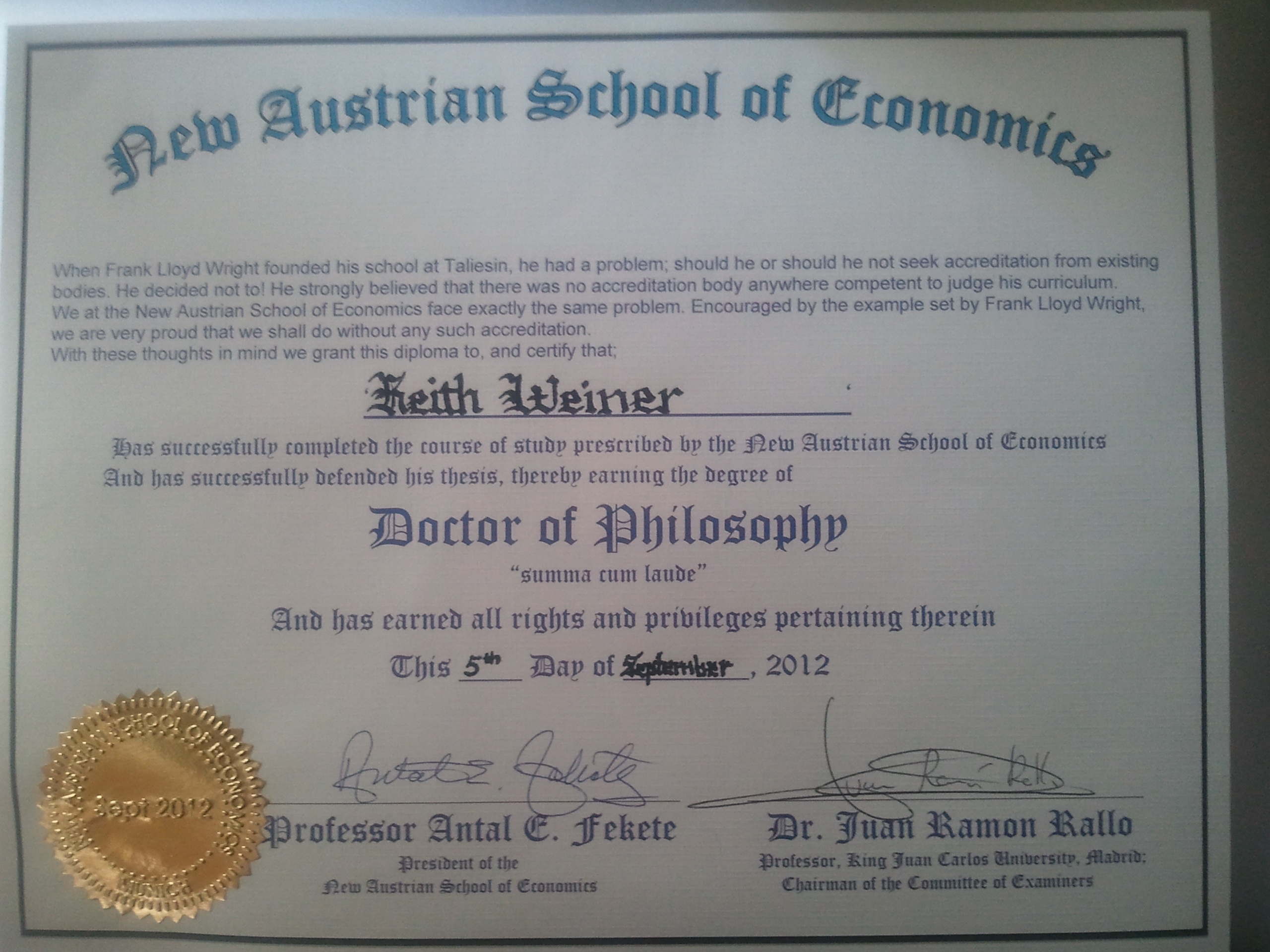
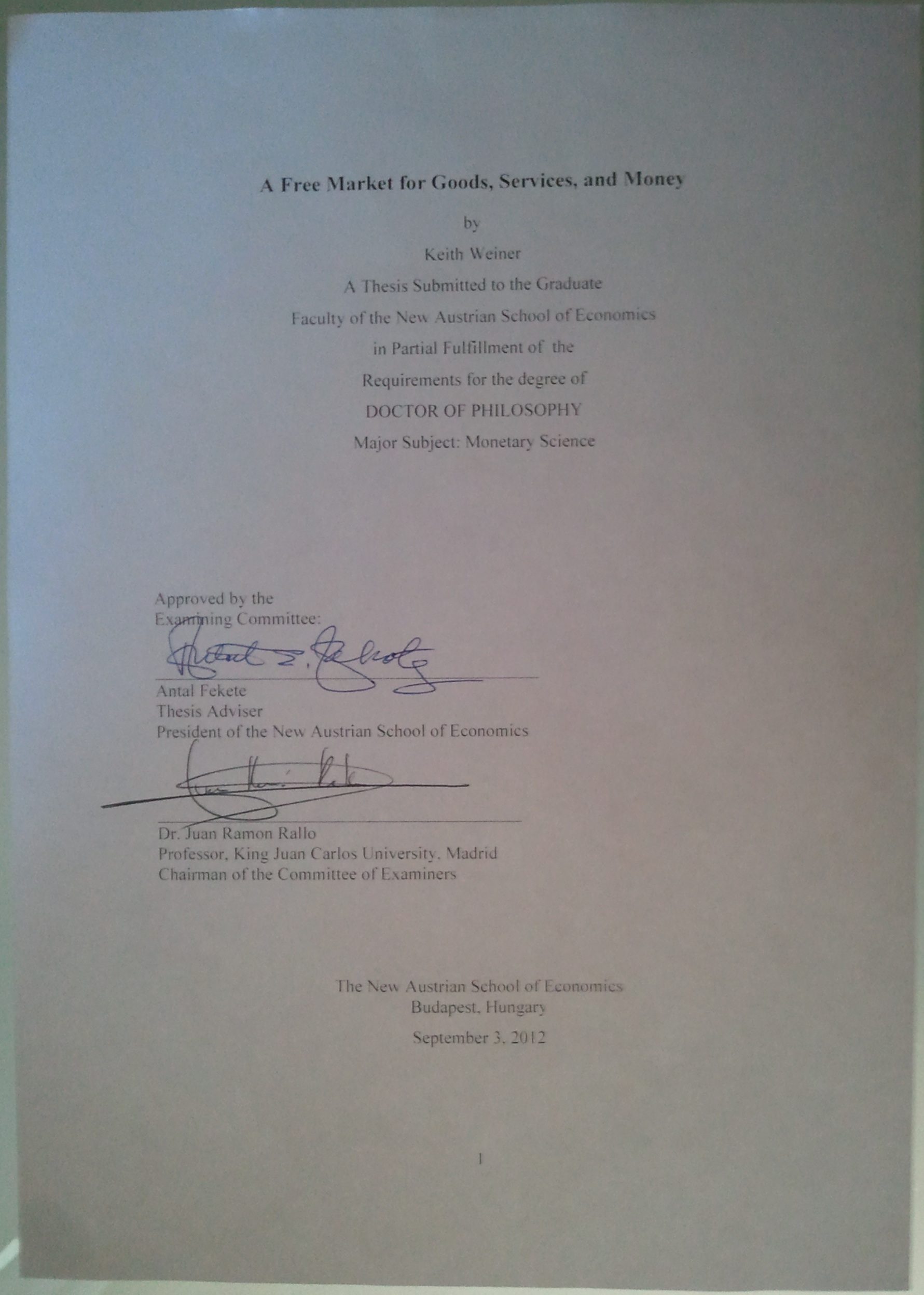
The financial press and alternative investing blogosphere is all abuzz about proposed German controls that attack High Frequency Trading (http://www.cnbc.com/id/49174317).  Government always justifies its coercive intrusion into markets by appeal to a sense of the “public good”, and its interference never delivers the goodies as advertises (see my doctoral dissertation for a full explanation of this: 

Free Market for Goods, Services, and Money).

In this article, I focus on just one aspect of this new control.  They are proposing to set a cap on the ratio of orders to trades.  At first, this sounds reasonable.  “Why should anyone have 10,000 orders for every trade that executes??”  This is an appeal to emotion, to make the reader angry at the thought that this is somehow cheating or unfair.

Let’s take a look at a shadowy and poorly understood player: the market maker.  He first appeared in the London coffee houses where stocks were traded.  Sellers lined up on one side, in ascending order of price (so the best offer (ask) was at one end).  Buyers lined up on another side, in descending order of price (so the best bid was across from the best offer).

The market maker came in and said he was ready to buy or sell.  He quoted a bid that was higher than the best bid and an offer that was lower than the best offer.  Virtually everyone was outraged, and many thought this newcomer must be some kind of criminal or cheater.  They were wrong.  Their outrage was fueled because the best bid was topped and the best offer was undercut.  How unfair!

The market maker earns his profits by narrowing the bid ask spread.  Today, of course, most people understand this and there are market makers in every liquid market.  What they often don’t understand (judging from the strident tone on many alternative investing blogs) is how he operates.  Liquidity does not mean a willingness to buy from all sellers and prop up the price.  Let’s not confuse market making with central banking!

It is not the market maker’s job to bankrupt himself by buying in front of an avalanche of sellers.  When the avalanche does occur, and the market maker smartly steps aside, the ensuing crash should not be blamed on him.  It should be blamed on the economic climate, the bust phase of the credit cycle, monetary policy (especially falling interest rates), and the liquidity crunches that occur due to the rising burden of debt.

The market maker is working to narrow a simple spread: the difference between the bid and the ask.  As the bid from buyers moves or the ask from sellers moves, the market maker must adjust his bid and ask.  The rate at which he must do this depends on the rate at which others in the market are changing their prices.

Another point worth highlighting is that sometimes a market is slow.  The bids and asks move up and down, but one can observe no trade for an hour or more.  I have observed this more than once in options on copper futures.  In the morning, I execute a trade.  The “last” price immediately updates on my eSignal screen to show this price.  By the afternoon, the bid and the offer could be a mile away from the morning.  And yet my trade still shows as the “last”.

So what will happen if the regulators force market makers not to change their prices more than twice a second, or force them to limit the number of orders based on the number of trades?

Some market makers will be rendered submarginal, and they leave the market entirely.  The survivors will be forced to widen their quoted bid-ask spread enough to cover the risk of a price movement during a time when they are barred from changing their prices.

The net result will be wider bid-ask spreads.  Both producers and consumers will experience this as higher cost, and traders will experience this as higher volatility.  Some traders will profit from this, and the real economy will have to absorb another blow.

Be careful what you wish for!

(c) Sep 26, 2012 by Keith Weiner

Draghi talks euro up +1.6%

Mario Draghi today promised to do whatever it takes to fix the euro.  ”Believe me, it will be enough.”  I don’t know why anyone would believe him, but that is not the point of this article.

 There is a Monetarist premise that is accepted almost universally today: the value of a unit of currency is inversely proportional to the money supply.  If the money supply goes up, this view argues that the value of the currency must go down.  And vice versa.  There is only one problem with this idea.

 It is wrong.

 The euro has been falling against the US dollar for over a year and the most recent leg down began in earnest in May.  It has not been falling due to expanding money supply.  It has been falling due to increasing market awareness that defaults are coming–reflected in collapsing bond prices not only in Greece but in Spain and Italy now.

 And this brings us to Draghi’s statement today.  He was not promising to decrease the money supply!  All of the “tools” in his “arsenal” are tools to increase the money supply.  Basically, he can print and lend (i.e. print money and lend it).

 Today, he reiterated his means and intent to expand the money supply.  And the euro went up +1.6%.

 Something to make one go think in the night …