Tag Archives: gold

Reflections Over 2024

How to start an essay on my year… Well, I traveled a lot. First, I went to New Zealand, Australia, Singapore, and then Dubai. I had to come home for our annual face-to-face meeting in Arizona. We gather all the employees for a week of presentations, meetings, and informal gatherings. We call this “The Refinery”, because it’s pure gold. By the way, I recommend every company take the time and spend the money to gather the whole team, offsite. It is so worth it.

Before I go on, I have to offer my observation about travel and the reaction of most people. They think it’s glamorous. I really enjoy meeting customers in person. And I have friends in many cities around the world. It’s great to catch up, have a few beers… and learn that a certain word of profanity, used in America only as a gutter word for a certain part of one gender’s anatomy, is used as an ironic term of endearment in New Zealand. It was … interesting … to see a bunch of guys all slinging this word at each other. Who knew?

Anyways, it seems glamorous looking in from the outside. But like pop stars, who look so good dancing and singing on stage, elite athletes who can move in ways the rest of us cannot even imagine, it’s mostly hard work. For them, literally blood, sweat, and tears. For the business traveler, it’s many hours sitting (or trying to sleep) in an airline seat. Eating greasy starch in an airport lounge, because you don’t know when you will eat next (delays are a real risk). Jetlag and being dead tired in important meetings. And at the end of a long day, getting on video calls at midnight (Dubai is 11 hours ahead of Arizona).

At the risk of making it look glamorous, I will say that Marriott awarded me “Ambassador Elite” status. I get automatic room upgrades of several levels, usually to a suite. Automatic access to the business lounge. And they serve free wine and scotch from 6-8pm every day. Johnny Walker Red Label is OK, and the cabernet is drinkable.

But it’s basically the Booby Prize. You spend a year living out of a suitcase, and the hotels take care of you a bit more than they would otherwise. Don’t get me wrong, I’ll take it! I’ll take it, but nobody would do this for the sake of the lifestyle.

After the Refinery, I spent almost the entire rest of the year on the road. I got home in mid December. Much of that time was spent in London (fantastic in the summer) and Dubai (117F or 47C plus 75% humidity in the summer).

My wife came to the UK to join me. We went on a cruise up to Norway and saw the fjords. Very cool! In a Viking living museum village, we heard about the causes of “armed Scandinavian tourism” to England and France.

I spoke at a gold conference in India. Bangalore is a lot cooler in the summer than I expected. The hotel was very nice. And the chaos and poverty between the airport and the hotel is worse than you would expect.

In the fall, weather conditions flip. Dubai weather becomes really nice.

In Dubai, there’s no pork, especially bacon (and no medium rare burgers to put it on). I began to crave both. And honey glazed ham. In Dubai, you get gallons of hot water raining down on you in the shower, to help you wake up in the morning. It’s very first world.

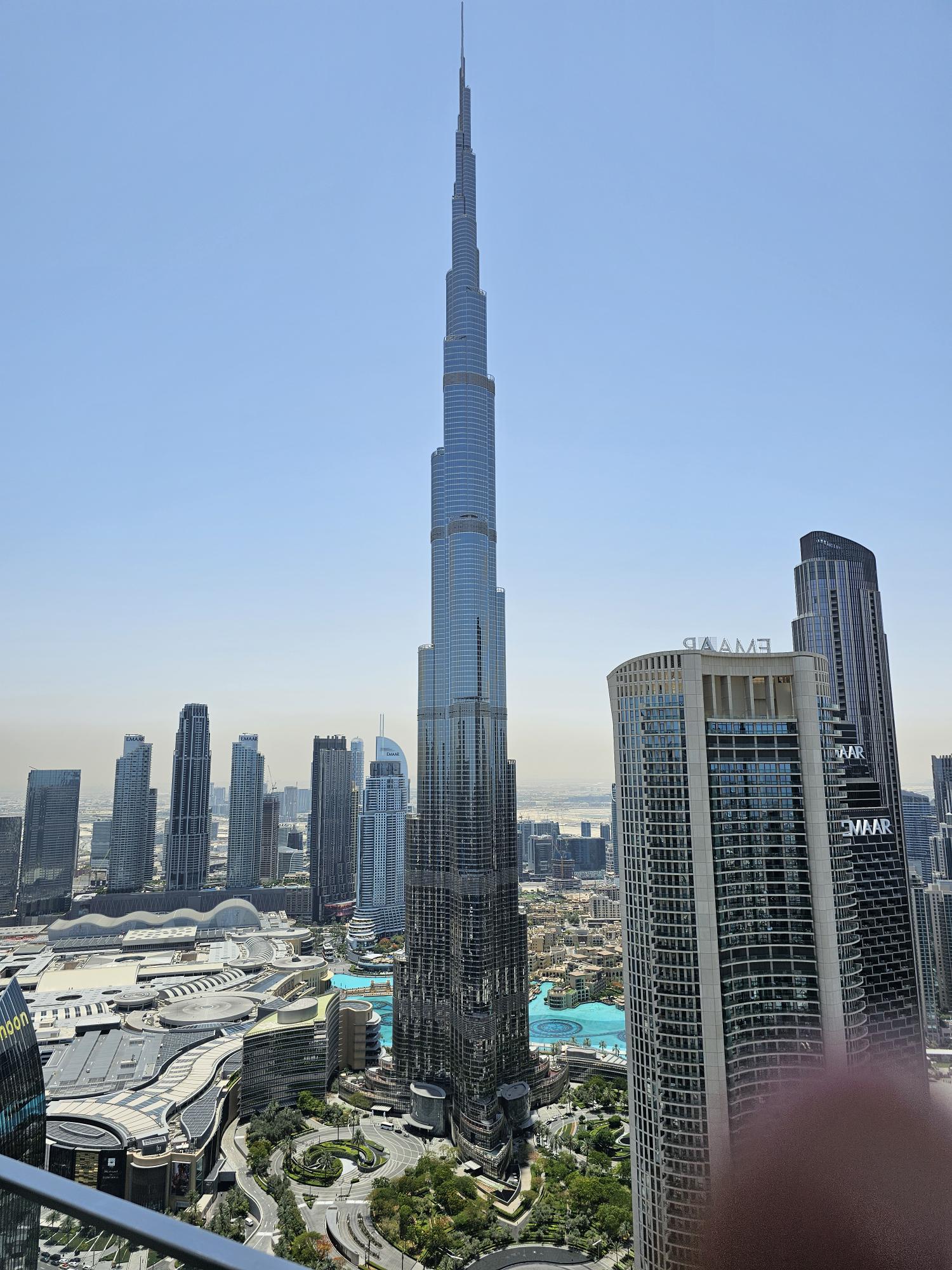
Dubai fascinates me. There is that crazy thin spire, drawing me like a moth to a flame.

There is no income tax, which benefits people from every country except the US (which taxes Americans on income earned abroad). Dubai is a pro-business environment, whereas in America, the regulators more and more look for ways to expand their power, which is to say, to block business activity and to add cost. To make everything frictional.

One visible difference is the architecture. Call some of those Dubai skyscrapers what you will…

There is a greater range of aesthetics. Some of them seem rather pointless but many look very cool. I don’t know how zoning and building permits work there, but clearly they don’t have endless Community Meetings to invite all the enviers to argue why the property owner shouldn’t be allowed to build what he wants, which enforce conformity in most US architecture.

Hotels have air conditioning in outdoor courtyards. Did I mention it gets to 47C and 75%? There is a sense, in which this is a crazy extravaganza. But also a sense in which, if you can afford it, why not? Without green energy restrictions and taxes, energy is cheap (and should be cheap, it’s part of what makes the modern world so much better than the ancient world).

It is a first-world place, at least for people who expect to pay for what they get. I will share an example. I tripped and fell, walking into a revolving door. In my haste to push myself out of the way of the still-moving door, I cut my left pinky and jammed it pretty good too. I went to the emergency room. The first thing is to show your passport and demonstrate means of payment. No money, no treatment.

But after that, it was extremely efficient and I did not wait to see the admitting nurse, then the doctor, then the X-Ray, then they cleaned and bandaged my finger, then the doctor to explain it was not broken and give me a prescription for an anti-inflammatory and antibiotics. Total cost, including the two medications: $250. My care was first class.

No “free” healthcare, but for an uninsured patient at least 10X cheaper than in America.

In Dubai, there are prominent signs talking about ideas that, once they are out in the public discourse, cannot be unsaid. Ideas such as all people must be equal under the law. Compare to the rhetoric of both the Left and the Right in the US or Europe right now. Ideas motivate cultures, nations, and ultimately drive history.

One last thing to say about Dubai, they do not seem to restrict the number of people who come to work. There is no minimum wage. There is no welfare system for non-Emiratis. The net result is that wages for unskilled labor are very low, but wages for skilled work and professionals are much higher. There is also no income tax, so salaries go much farther than in America—and people can save for retirement.

I went back to London before heading home. London gets dark and dreary even when the sun is in a blue sky. No warmth and not a lot of light.

Finally, I got home. Phoenix weather is not that different from Dubai this time of year.

I took the family to a Christmas brunch at a local hotel. They had honey glazed ham, the best!

I was reminded that we have regulations which make it so we can’t have nice things. The shower goes “pttthhhh”, with a bunch of little needle jets which hardly wash off the soap. America was never the place where the quality of life was lower. Now, in some ways, it is.

There is a reason for all this travel. To grow Monetary Metals!

And, by every metric, we had rapid growth this year. We raised over 1M ounces of silver to finance a mine restart for Bunker Hill. The number and size of our gold lessees increased substantially, and of course this would not be possible without adding gold deposits and depositors. We established Monetary Metals DMCC, a subsidiary in Dubai. We grew our headcount to 43 people.

To finance this growth, we raised over $5M in equity capital, and sold a 4,700 ounce gold bond which pays 6%. This is the first gold bond that isn’t for a mining company.

I’ve been saying for years that an informal, working definition of a gold standard is when anyone who wants to, can earn interest on their gold in gold. Therefore, the gold standard is when we scale up. Well, we are in the scaling phase.

Incidentally, this highlights something missing in the crypto world. Will someone create a Monetary Cyptos, to pay bitcoin interest on bitcoin (and doge interest on doge) by lending it out to productive businesses? You can’t have a monetary system without finance (and finance is required for large-scale productive enterprises).

I am throwing down the gauntlet.

Speaking of monetary systems, I was asked to write the monetary chapter for a forthcoming book published by Springer. Free Trade in the Twenty-First Century: Economic Theory and Political Reality. Coming in February.

It’s been a helluva year!

Commodities, Consumer Goods, Prices, and Time

Marian Tupy and Gale Pooley, at the Cato Institute, write about the Simon Abundance Index. SAI is named for Julian Simon, famous for his bet with the Malthusian Paul Ehrlich (infamous for writing The Population Bomb). Simon bet Ehrlich that commodity prices would fall from 1980 to 1990. Simon won the bet, but the whole exercise did not prove what he thought that it did.

I wrote about basic error in the methodology of “adjusting” for inflation. In brief, the error was in “adjusting” the dollar using the Consumer Price Index. This “adjusted” dollar is used to measure commodity prices. Thus showing that commodity prices fell.

The flaw is that consumer goods are made from commodities. Thus the whole calculation is circular!

This is not measuring commodity prices objectively, as Simon supposed. It does not show that commodities fell in absolute terms. Only relative to consumer goods.

What this wager actually measured, is the spread between commodities and consumer goods. This spread widened.

Is this a good thing? Perhaps, if the ultimate consumer good consists of more and more other things than raw materials, such as technology, manufacturing process, engineering, etc. Or perhaps not, if it merely shows the exponential growth of mandatory “useless ingredients” constantly imposed by government.

Enter the Simon Abundance Index (SAI). Thankfully, this index does not use consumer price index adjusted dollars to measure commodities. Instead it uses what the authors (who created the index) call “timeprices”. In brief, this is how many hours one must work to purchase something.

This is a lot better than “adjusted” dollars, because the time spent working to earn a consumer good is not directly subject to monetary policy.

It is indeed good that the timeprices of commodities have fallen dramatically (though not for long periods like 2003-2008, or during the Covid lockdown).

However, what is not shown is the timeprices of consumer goods. More importantly, the ratio between the two. It would be very instructive to see this ratio, because this ratio would show us the clearest picture of the impact of the Regulatorium.

Suppose the ratio of consumer timeprices to commodity timeprices doubled. Perhaps both timeprices fell (i.e. one’s labor buys more commodities or more consumer goods). But the timeprices for consumer goods fell less. What would that be telling us?

That the consumer good – commodity spread is widening. This means that more and more cost is being inserted somewhere in the process of converting raw materials to consumer goods and/or distributing those goods to consumers.

As I explain in my dissertation, a widening spread is proof of a decrease in coordination. This decrease is caused by the chronic, relentless addition of more regulations and compliance enforcement, as well as taxes.

In other words, the price of a 25,000 pound lot of coffee in Jakarta may drop. While the price of a coffee in a downtown cafe only gets a bit cheaper (or actually gets more expensive).

How Not to Trade the Dollar

I hope this essay provides some food for thought. It is not my intention to insult or belittle anyone, but using humor and cold logic, to help people understand an abstract topic with many counterintuitive principles. The ultimate goal is to protect what you have and make some more (in that order).

Gold is money. We have published a video to make the point that one should use gold to measure the economic value (i.e. price) of everything else including the dollar.

So what does that make the dollar? It is a form of credit, and its quality is constantly falling because the Fed is incessantly forcing more counterfeit credit into the market. The price of the dollar is in long term decline, starting at around 1.6g of gold in 1913 to around 21.3mg (yes milligrams) today.

The price of the dollar sometimes rises for reasons that may not be obvious. The financial system today is highly leveraged. Small changes at the margin, such as intermittent pressure on debtors, can be amplified by this gearing. In the casino of FX markets, traders chase momentum. The occasional crisis somewhere in the world can put enormous (if short term) buying pressure on the dollar. Fear, misinformation, and even delusion can make the crowd run the wrong way. How many people sold their gold on the rumor that Cyprus might sell 10 tons of gold on the market?

The dollar is not suitable to measure the value of gold. It is too volatile, not to mention that it is generally falling. This idea has profound implications on investing and trading. I address one of them in this article.

The central fact of gold today is both self-evident and non-obvious. Most people find it hard to get their heads around the fact that a rising gold price does not produce gains for gold owners. Our whole lives, we’re trained not only to think of the dollar as money, but to think that the dollar price of everything is its value. It is a deeply held belief that if you increase the number of dollars you own, then you have a gain. It is time for this illusion to be dispelled.

Consider a simple trade. First, you buy gold. Then the price of gold goes up. Then you sell the gold. You have a profit, right?

Wrong.

You have more dollars (and the government will tax you on the increase). Each of them is worth less, in precise proportion to the number of them that you gained. To underscore this, let’s look at it from outside the dollar bubble. A rise in the gold price from $1350 to $1500 is really a drop in the dollar from 23mg of gold to 20.7mg. If you bought an ounce of gold with 1350 dollars you still have one ounce worth of dollars when the dollar has fallen to 1/1500 ounce (or 1/5000).

This means that a strategy of buying and holding gold for the long term does not produce wealth.  It protects wealth, because gold does not fall. To get richer, you must either invest to receive a yield in gold, or speculate on an asset with a rising gold price. Producing a yield on gold is the reason why Monetary Metals was formed. Speculating on rising asset prices is challenging because as we head into this greater depression, demand is falling. I recommend checking out www.pricedingold.com, which has charts of many different things priced in gold.

It is possible to trade the short-term volatility in the dollar. To frame this objectively, it is buying the dollar when it is down and selling when it is up. I deliberately did not state this as people commonly think of it today: buying gold when it is down and selling gold when it is up. Gold is not going anywhere; it is the dollar that is volatile and falling.

Your first choice is whether to use leverage. Leverage would allow you to profit from the rising gold price because you will gain more dollars at a faster rate than the dollar is losing value. Let’s illustrate this with two examples.

The first example uses no leverage. You buy 100 ounces of gold for $1460 per ounce, a total of $146,000. The gold price eventually doubles to $2920. You have twice as many dollars, but unfortunately each of them is worth half as much. Your net worth in gold is still 100 ounces.

The second example uses 5:1 leverage. You buy 500 ounces of gold at $1460 per ounce, or $730,000 worth of gold, but you only need the same $146,000 as in the first example. The bulk of the capital, $584,000, is credit. Then, the gold price doubles to $2920. Now your 500 ounces is worth $1,460,000. You can sell 200 ounces to pay the debt, and you are left with 300 ounces free and clear. Your net worth tripled from 100 to 300 ounces.

However, there is a dark side to leverage. When the price falls, leveraged accounts are subject to margin calls. The trader must immediately put in more dollars or else the broker will sell everything, and the trader could lose everything. Just ask anyone who was leveraged a few weeks ago when gold was near $1600 what happened, and if he still has a gold position, or any capital left in his account at all.

This kind of event is exceedingly hard to predict. We did not predict it from our analysis of the basis (though we did make a bold and controversial prediction and trade recommendation that has performed quite well). Following April 15, the basis allowed us to see that large quantities of physical gold and silver were flushed out of someone’s hands and into the market. And as we go forward, it will allow us to see the changes in scarcity of gold and silver.

Not counting the Keynesians, or the perma-bears who have long thought that gold should collapse to $250, some technical analysts put out bearish calls on gold and a few called for a significant and rapid price drop.

Trading the downside in gold is very difficult because no matter how the technicals look, there is a risk that some central bank or big player could make an announcement that would drive the gold price up sharply. Indeed, we predict that volatility will rise as we go forward. For this reason, and of course the upward bias to the gold price, we never recommend a naked short position in gold or silver.

If you do not use leverage, it is difficult to produce a real gain. Remember that a generally rising gold price is just a generally falling dollar. You can’t make a profit from this. You rely on short-term volatility. You buy gold at a lower price and then sell it at a higher price. And you must hope that the gold price falls again. If not, then your strategy has failed.

There are other downsides to the unleveraged strategy.  One is that you must hold falling dollars at times. You buy gold, hold it for an hour or a day or a week and then you sell it. You’re left holding dollars, hoping for a lower gold price. During that time, you are exposed not only to the falling dollar, but also to the credit of your bank or broker as well. We would prefer a strategy that allows one to sleep at night, especially Friday, Saturday, and Sunday night.

I corresponded with a gold dealer in Cyprus following their collapse. He recommended to people to buy gold. Not one person took his advice. Now, of course, they regret their decisions. This is not because consumer prices rose in Cyprus, but because what they thought of as “money” has turned out to be just bad credit, a defaulted piece of paper. Gold does not default.

At the end of the day, when the dollar collapse takes on a more vicious dynamic and rapid pace, the gold price will be rising sharply, perhaps exponentially. What will you do then? If the charts say that gold is overbought, will you take your profits? Will you sell at a record high price? Will you trade all of your gold for dollars immediately prior to the dollar becoming utterly worthless?

With or without leverage, trading any market without better information and/or a superior understanding than the other traders is a sucker’s game. Having faith in a $50,000 gold price and a conspiracy theory that a Dark Cabal manipulates it down to  $1460 is not information or understanding. It is just hope plus words of comfort to use after each wounding.

The gold market has price moves that cannot be predicted in advance and in some cases do not have an obvious cause in contemporaneous news coverage. In my article on the gold price drop, I do not point the finger at the rumors of Cyprus being forced to sell its gold, Texas or Germany demanding their gold, etc.

Today, at $1460, the question is: are there dissatisfied traders who held on during the crash, and who are now waiting for a slightly higher price to sell? Will these people outweigh the hungry buyers who look at the current price as a sale, in the short term? We would not care to make a prediction on this. The long term is much easier to predict. The catch is that without leverage, you cannot profit from it and with leverage you can get squeezed out in a price drop before the price rises.

Technical analysts that we respect now say that massive damage has been done to the gold and silver charts, and there is a likely to be a further drop in the prices. Some technicians are calling for a price at or below $1100. Will it happen? Maybe, and if it does, it won’t be caused by the Dark Cabal.

It will be dollar-oriented traders, eager to sell low because gold is “falling”, and the destructive dynamics of stop orders, margin calls, momentum chasers (who do sometimes short gold naked), etc. As when gold’s price was rising, now that it’s falling traders are trying to outguess the others in the market, who are trying to outguess them. The picture of a Ouija Board is not too inaccurate.

It is possible to trade gold professionally, to make a profit measured in gold. If you want to trade, then you ought to know about the mechanics of the market (e.g. arbitrage, about the concept of relative gold scarcity (i.e. the gold basis), and about monetary science (e.g. pressures on markets related to changes in credit). Develop your trading strategy around them, rather than on whispers of big London or Chinese buyers, and curses at Dark Cabals.